Trading Automation Is the Future. The Trader Still Matters.
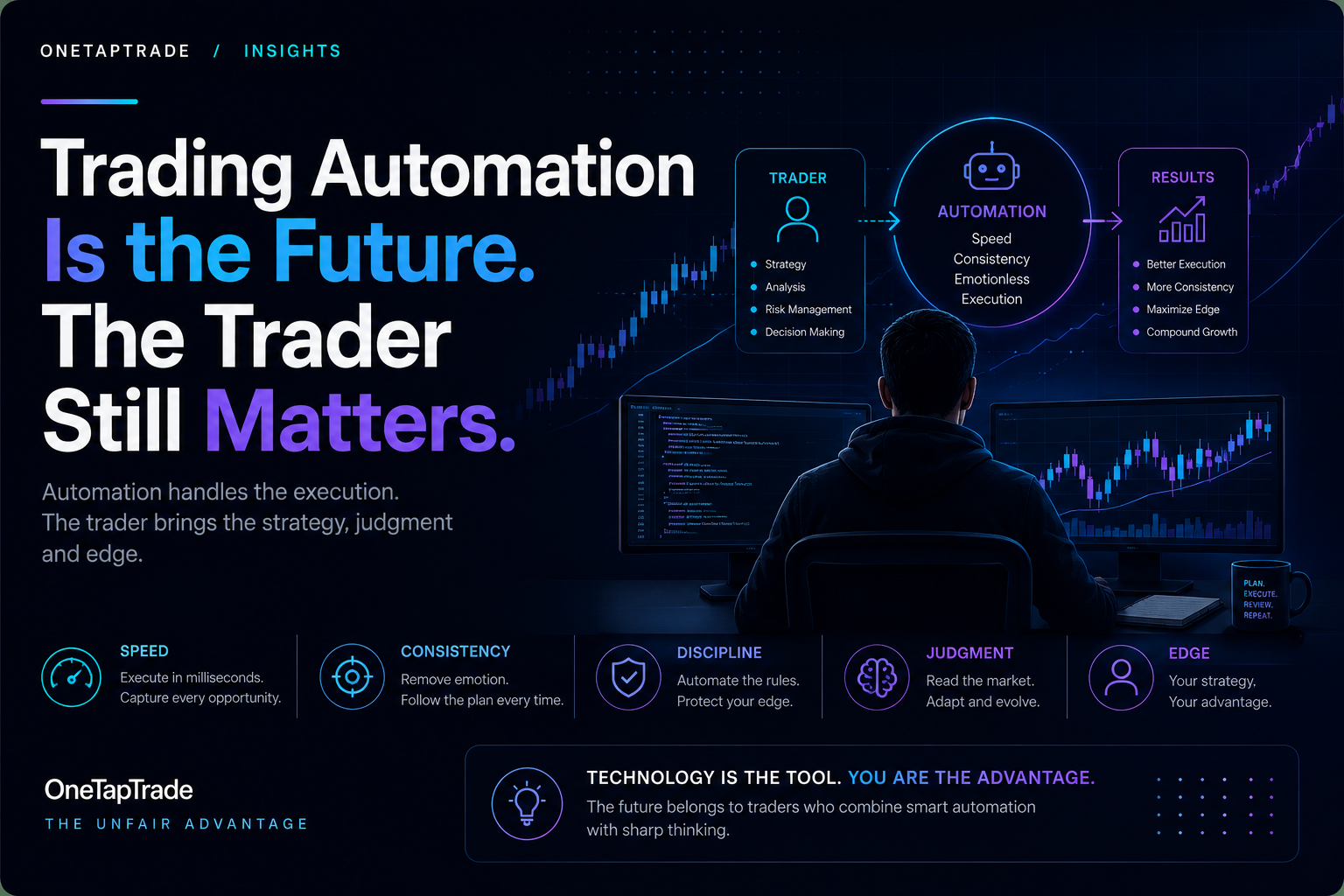
Trading has changed dramatically over the last decade.
Technology has made it possible for traders to analyse markets, test strategies, automate execution and monitor accounts without spending every hour sitting in front of a chart.
Yet many traders still face the same problems: lack of time, emotional decision-making, inconsistent execution, poor discipline and difficulty managing risk.
What Is Trading Automation?
Trading automation uses software to execute a predefined trading strategy according to specific rules.
An automated system can monitor the market and execute those rules when the required conditions are met. Strategies can be based on support and resistance, market structure, liquidity, breakouts, price action, volume, indicators or combinations of conditions.
Automation isn't a shortcut to profitable trading. It makes consistent execution possible.
Why Do Traders Use Automated Trading?
- Time. Automation can monitor markets without requiring the trader to remain behind the screen.
- Consistency. An algorithm follows its defined rules rather than reacting to mood or previous results.
- Discipline. Automation can reduce unnecessary emotional decision-making.
- Speed. Automated systems can monitor conditions and execute according to programmed logic.
Automated Trading Doesn't Mean Giving Up Control
We believe automation should give traders more control over execution, not less.
The trader should be able to choose the strategy, account and risk, and decide when to deploy or stop. The automation handles execution while the trader remains in control.
From Trading Idea to Automated Strategy
One of the biggest barriers to algorithmic trading has traditionally been technical knowledge. Modern automation tools can help traders translate their ideas into systematic strategies.
But a human description isn't automatically a perfect algorithm. Traders may use visual judgement or discretion without realising it. An algorithm needs those decisions to be defined.
Why Backtesting Matters
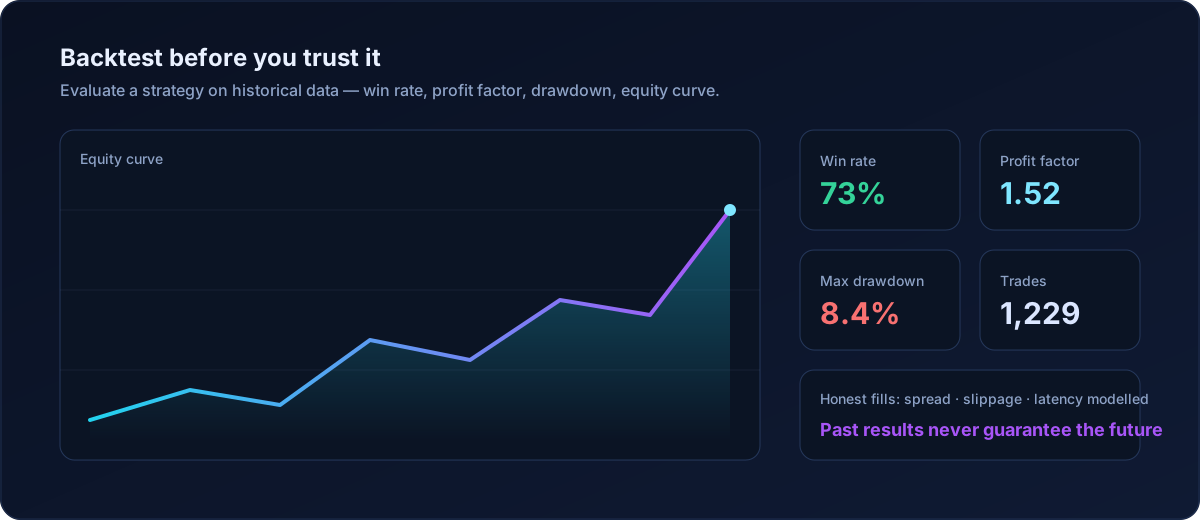
Backtesting allows traders to evaluate a strategy against historical market data using metrics such as win rate, profit factor, drawdown, number of trades, average win, average loss and equity curve.
Automated Trading and Risk Management
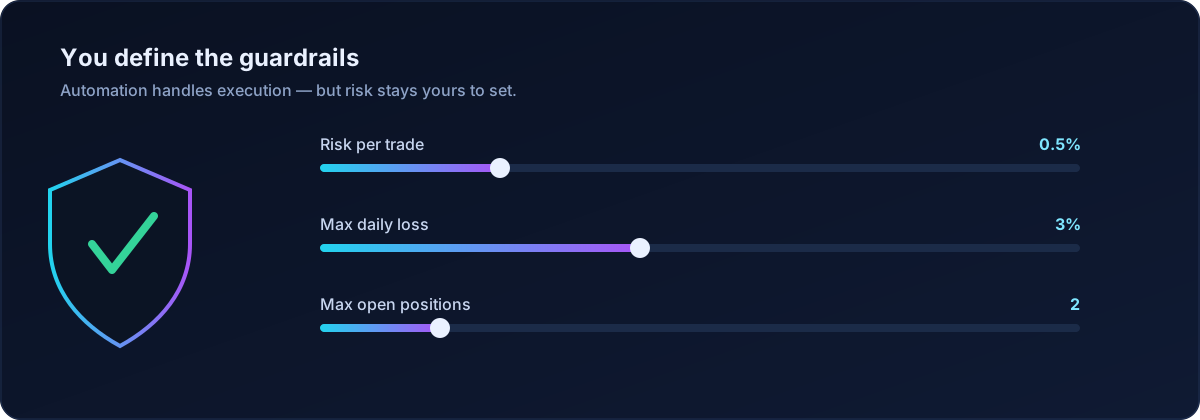
Automation can help with execution, but it doesn't eliminate risk. Traders should consider risk per trade, maximum daily loss, maximum overall loss, position size, maximum trades and account-level risk controls.
Automated Trading vs Manual Trading
Manual trading allows human interpretation, context and discretion. Automation provides continuous monitoring, consistent execution and fewer emotional decisions.
What Makes OneTapTrade Different?
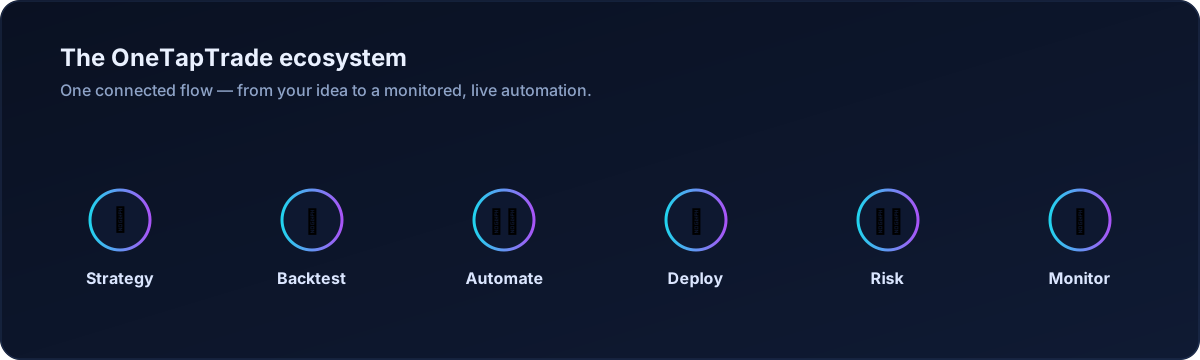
OneTapTrade is being built as an end-to-end trading automation ecosystem:
- Strategy Creation — turn an idea into a defined strategy.
- Backtesting — test it against historical data.
- Automation — turn it into an automated system.
- Deployment — connect compatible broker or prop-firm accounts.
- Risk Management — define automation risk.
- Monitoring — monitor accounts, strategies and trading activity.
The Future of Trading Automation
The industry is moving toward greater automation. AI, algorithmic trading, cloud computing and accessible development tools are making sophisticated technology available to more traders.
But technology alone isn't the advantage. The advantage comes from how the technology is used.
We don't want to be another company selling black-box bots with unrealistic promises. We believe traders should be able to build, test, automate and control their own edge.
The Trader Still Matters
The future isn't about removing humans from trading. It's about removing unnecessary friction.
Less time staring at charts. Less emotional execution. Less hesitation. More consistency. More control. Better tools.
That's the future we're building at OneTapTrade.
THE UNFAIR ADVANTAGE.
OneTapTrade is a technology platform and does not provide financial or investment advice. Automated trading involves significant risk. No strategy or automation system can guarantee profits or future performance. Backtested and historical results do not guarantee future results.